I’m writing to you in one of those rare, stolen silences—the kind that only happens when the holidays have finally exhaled and the house is still. My coffee is going cold. And I’m thinking about us. About the year we’ve just weathered. 2025.
I read something recently that made me pause. Warren Buffett once shared a simple, powerful idea.
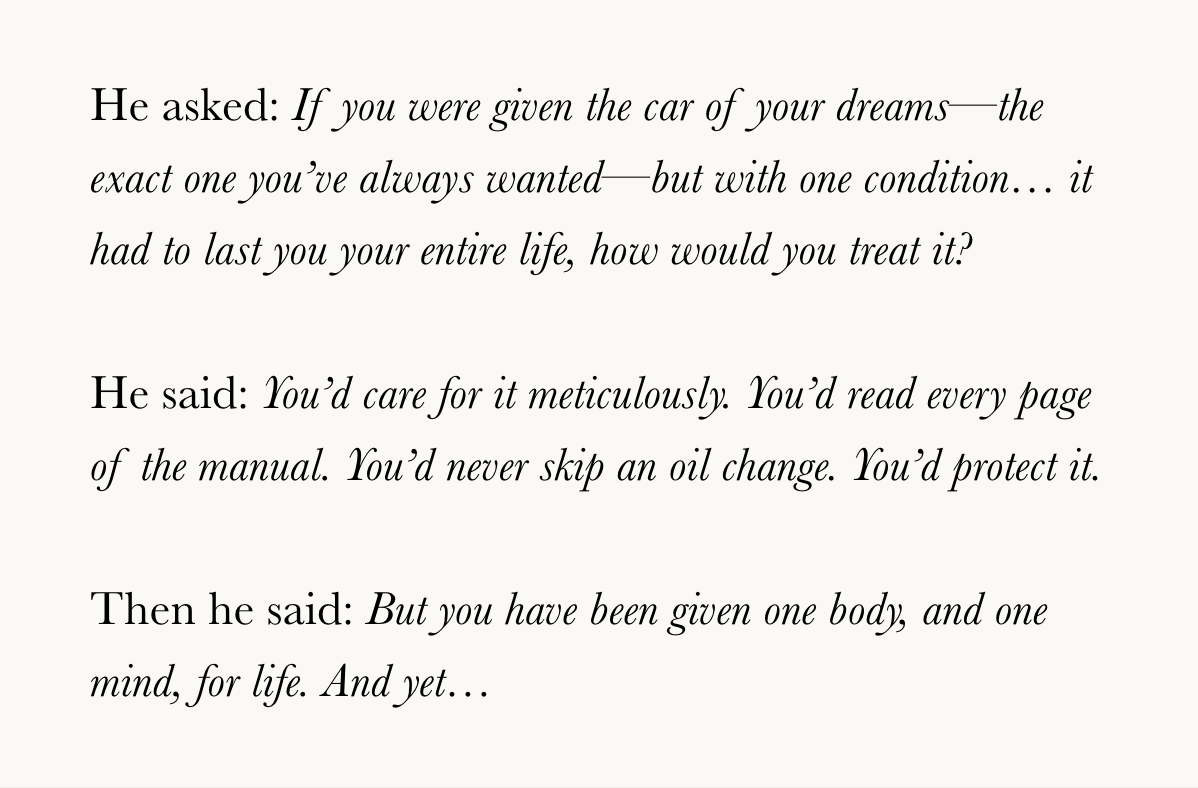
That thought sat with me, more painfully than I expected.
We have this one vessel. This one life. And yet, how easily we forget. We treat our energy like it’s renewable, our time like it’s infinite, our health like it’s a given.
2025 was the year I remembered.
If I had to name it, I’d call it…
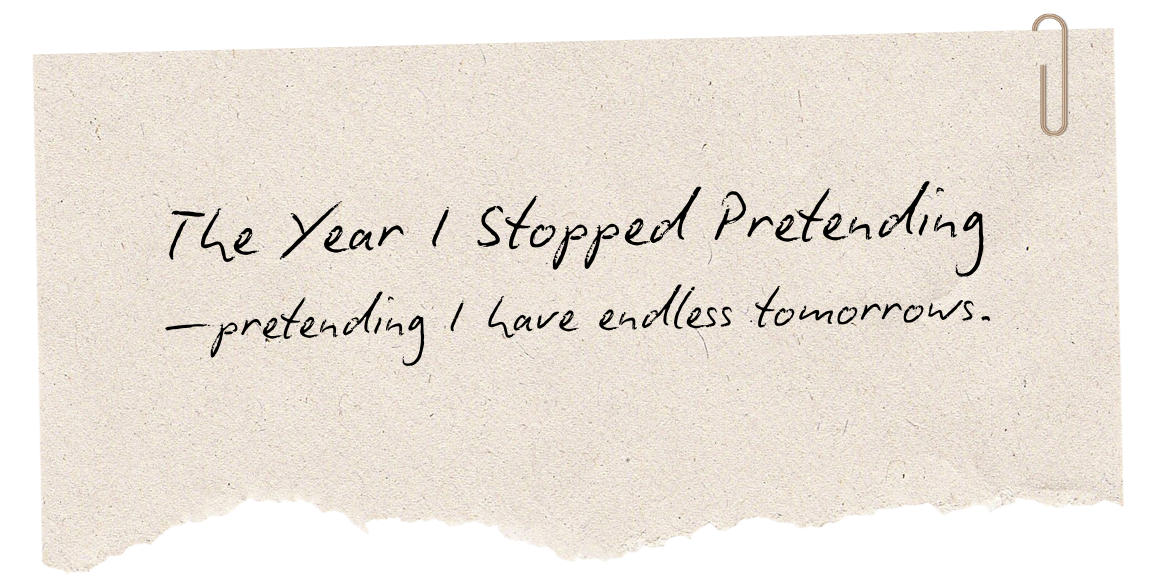
I stopped pretending my body would stay the same. Perimenopause wasn’t just a hot flash or a mood swing—it was my body’s gentle, persistent reminder: You have one. This is it. Listen to me. I decided to learn its language instead of fighting its symptoms. It taught me that care isn’t about fixing, but about adapting—sometimes gracefully, but more often than not, messily.
I stopped pretending that busy is the same as being present. Last July, I looked at the school bus schedule and saw a transaction: my quiet morning for their independence. And I realized I was outsourcing the bookends of my kids’ days—the very moments where life spills out in the car, in the quiet before the bell rings. So I took back the keys. The drop-offs and pick-ups, even on the chaotic mornings, became our tiny, daily sanctuary. Just us, the music, the occasional grumble, and the connection.
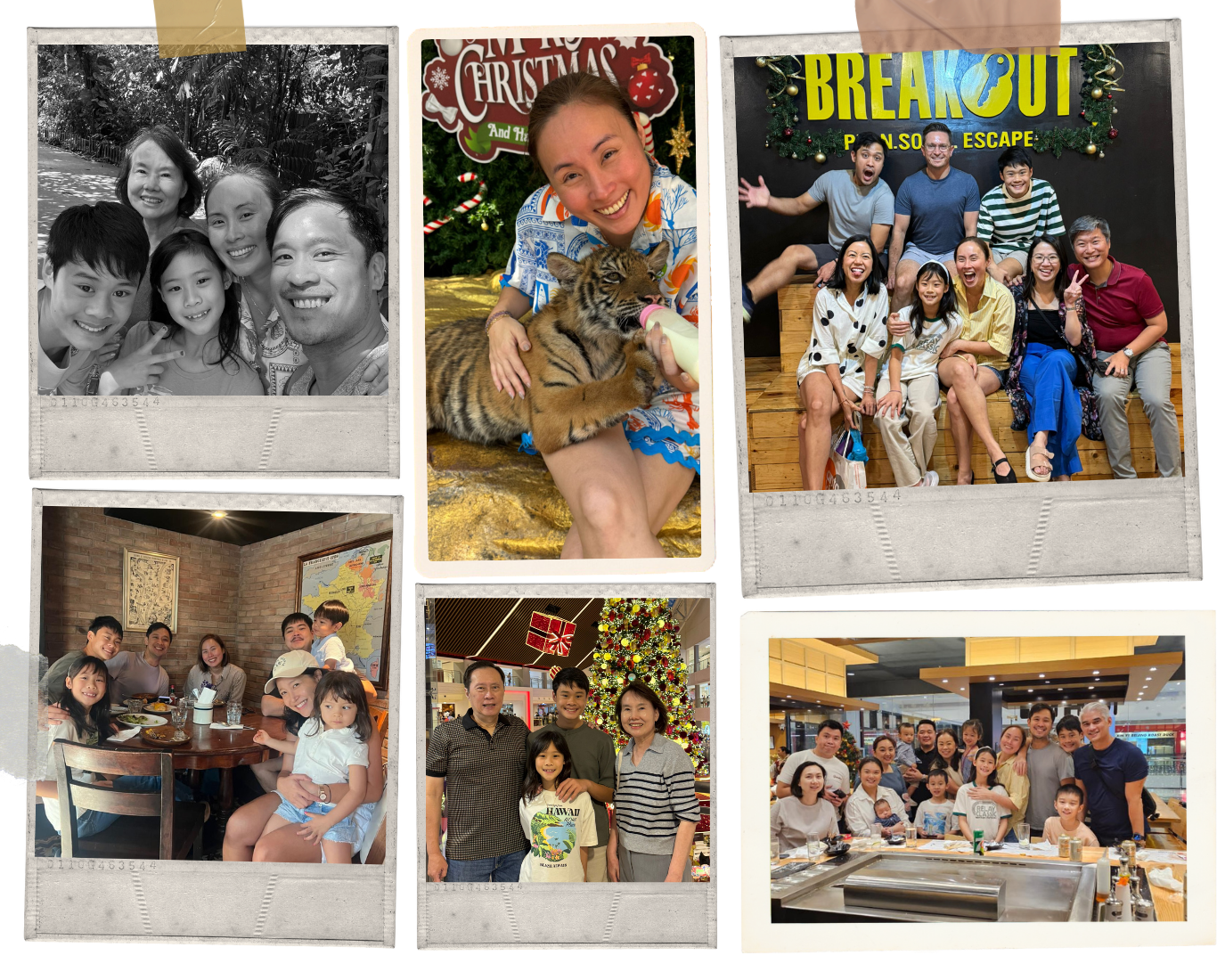
I stopped pretending we were too far away from everyone. We started making more of an effort to connect with family and loved ones, even those we haven't seen in years. We sat with them, shared meals, went on hikes. We remembered that presence is a choice, not a coincidence.
And then came the bigger reckonings…
The intentional, heart-led decision to scale down my work and close The Nest. It was a goodbye to something I loved to make space for… well, for the people I love. For myself. For my art, so I could create more beautifully in places that mean something.
Then, health stuff. My eyes. My back. And my bilateral breast biopsy. The stark, clinical language of "pre-cancerous cells" and "stages." Every time I wavered in my decision to cut back, the universe pushed me to be steadfast. My body wasn’t asking—it was insisting. I had to turn the page on exciting plans and sit in the stillness of not knowing. You don’t ignore a warning light in the only vehicle you have.
And in the middle of it all, I explored other art forms and ideas that led to my healing. I didn’t pick up a new camera. I picked up a pen and wrote my heart out. Not to perform or to perfect, but to excavate. I wrote to meet the little girl I used to be—the one I’ve tucked away, who learned to be quiet, to be good, to make herself small. I wrote to her, for her. And in tracing those old wounds, I also began tracing my roots. I wrote to remember how culture, both positively and negatively, has shaped me. Some days it felt like pulling splinters from my soul. Other days, it felt like coming home.
And here I go into 2026 and I want to share my takeaway for every woman who has ever felt she is the glue, the calendar, the heart, the engine:
1. Your softness is not a weakness. Your boundaries are love.
Giving myself permission to be “selfish”—to nap without guilt, to say “no” to protect my “yes,” to take a trip alone—wasn’t an act of withdrawal. It was preventative maintenance for the woman my people need. A well-cared-for vessel can go the distance.
2. The systems you build set you and your people free.
Building blocks of time for my work and delegating more have helped me and my team immensely. Leaning in doesn’t have to mean doing it yourself. At home, our 20-minute Sunday family meetings aren’t about perfection. They’re about giving my kids (and husband) agency. The kids scribble in their own planners. We share our little wins. We still forget permission slips, but they’re learning to own their time, to ask for help, to advocate for themselves. I am not raising dependents; I am cultivating capable humans. It might be a pain now, but it will pay off in the end.
3. What you release can be more freeing than what you acquire.
I wanted less. This went beyond saving money. It was an active unburdening—letting go of the things that demanded space and care to make room for experiences that give energy and create memory. The satisfaction shifted to the everyday, the simple, the meaningful.
4. Support the vessel.
I bought a better office chair. It sounds trivial. But it’s a metaphor we live in. We pour ourselves out but will sit for years in something that hurts us. That chair purchase said: This vessel matters. Its comfort is not an afterthought. It is the only one I get.
So, as we stand at the threshold of 2026, I am not wishing you a “balanced” year. Balance is a myth that makes us feel guilty.
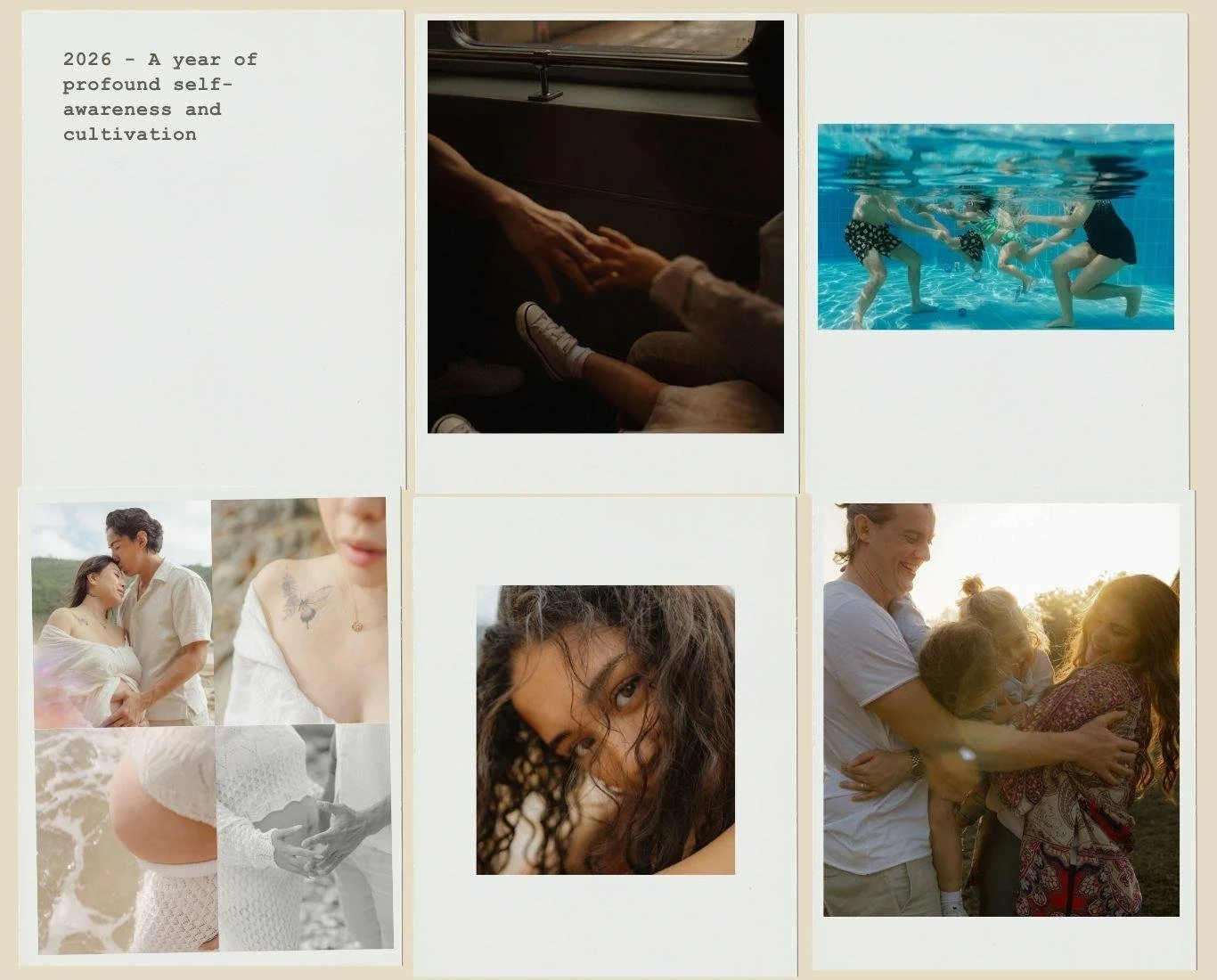
I am wishing you a year of profound self-awareness and cultivation.
A year where you learn the sound of your own intuition and trust it.
A year where you become comfortable with failure—not as a setback, but as proof you were in the arena, trying.
A year of healing from the old shame and guilt that tell you you’re never quite enough. You are.
I am wishing you the courage to advocate for yourself—for your time, your health, your peace—and to know it is not only okay, it is essential.
I am wishing you the wisdom to know you don’t have to tackle everything. You can always choose what to sit with, what to sit outside of, and what to simply let pass by.
I am wishing you the clarity to know what is “enough” for you right now, and the permission to want “more” when the time is right. And these may look different for you versus everyone else in the room. That doesn’t make them less valid. They are part of your becoming.
Here’s to 2026. Here’s to treating our one incredible life with the reverence it deserves. Here’s to showing up—for ourselves, for our people—from a place of wholeness, not depletion. Here’s to building a home within ourselves, and inviting others into its warmth.